
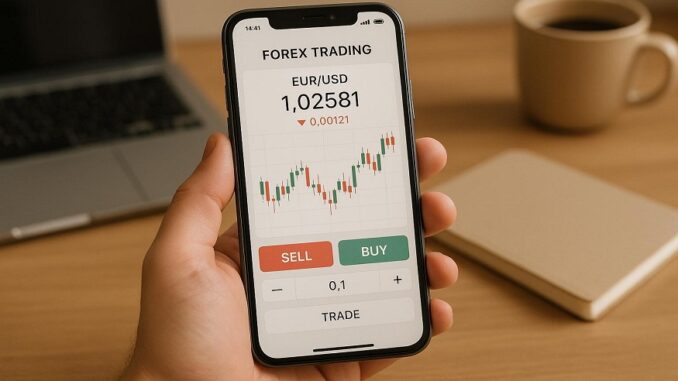
India’s financial ecosystem is evolving rapidly as more individuals embrace stock market participation through seamless Demat services and innovative Trading Apps that make investing easier than ever before. Earlier, many people hesitated to enter equity markets because traditional investing processes seemed confusing, time-consuming, and expensive. Today, technology-driven platforms have completely transformed the experience by offering paperless onboarding, instant account activation, simplified market analysis, and user-friendly interfaces designed for modern investors.
This digital shift is especially visible among young professionals and first-time investors who prefer managing finances directly from their smartphones. Instead of relying entirely on brokers or financial advisors, investors now conduct their own research, track market movements in real time, and execute trades independently. The growing accessibility of financial education and investment tools has empowered retail investors to make more informed financial decisions while developing stronger long-term wealth creation habits.
The Growing Influence of Technology on Investing Behaviour
Technology has fundamentally changed the way traders interact with economic markets. In the past, participation in the stock market required extensive bureaucracy, physical visits to brokerage firms, and lengthy verification methods. Modern funding platforms have dramatically simplified those processes by introducing entirely digital account opening systems that can be completed within minutes.
Read More : Perspectives from Charles Spinelli on Efficient Payroll Administration Systems
Accessibility of smartphones has played a major role in increasing retail participation across India. Investors living in small towns and semi-urban areas can now access the same market opportunities that were quickly concentrated mainly in metropolitan areas. Real-time information, stay maps, instant order fulfilment, and content research tools have improved the convenience of customers who enjoy a kind of on levels.
In addition, receiving educational content within investment plans has encouraged more and more people to start their financial journey with some success. Many systems offer new courses, glossary sections, market explainers, and financial calculators to help clients understand financial ideas without overwhelming them. This educational aid reduces doubt for first-time traders and encourages responsible participation in the stock market.
Why Retail Investors Are Becoming More Financially Aware
Financial awareness has increased significantly among Indian households in recent years. Rising inflation, changing career structures, and growing aspirations have encouraged individuals to think beyond conventional savings methods. Investors are now actively exploring equity markets, mutual funds, ETFs, and long-term portfolio strategies as part of broader financial planning.
Social media and digital content have contributed to this awareness by making financial discussions more mainstream. Topics such as SIP investing, portfolio diversification, market corrections, and wealth creation are now frequently discussed among young professionals. While this has improved overall awareness, investors still need to distinguish between credible financial guidance and speculative market hype.
Retail investors are increasingly recognising the importance of financial independence. Instead of relying solely on salaries or traditional savings accounts, individuals are focusing on building multiple income sources through investments. This mindset shift is encouraging more disciplined financial behaviour and long-term planning across different age groups.
Key Features Investors Expect From Modern Platforms
Modern businesses prioritise comfort, reliability, and transparency when choosing financing systems. Platform stability is a critical element in the current climate of excessive market volatility. Delayed order execution or software downtime can negatively impact buy and sell research, especially during sharp market movements.
Safety is every other important issue for buyers. Because digital platforms control touchy economic and statistical transactions, customers can afford strong encryption structures, multi-factor authentication, and stable payment infrastructure packages. Trust plays an important role in consumer retention within the financial services organisation.
Ease of navigation additionally impacts user happiness drastically. Investors prefer software that offers smooth interfaces, customizable dashboards, checklists, and concise access to important information. Complex interfaces can prevent newbies from exploring the financial markets optimistically. Platforms that simplify for individuals typically attract stronger engagement from retail sponsors.
High-quality customer support is equally important. Investors may also need help with account verification, money transfers, tax filing, or technical issues. Fast and reliable mentoring services help boost an individual’s confidence and build more powerful and lasting relationships between traders and brokerage firms.
How Disciplined Investing Creates Long-Term Wealth
One of the most valuable lessons investors learn over time is that consistent investing often delivers better outcomes than chasing short-term market excitement. Emotional decisions driven by greed or fear frequently lead to poor financial results. Disciplined investors typically focus on long-term objectives rather than reacting impulsively to daily market fluctuations.
Systematic investing helps individuals build financial habits gradually. Monthly investments encourage better budgeting and reduce the temptation to spend unnecessarily. Over time, consistent investing combined with compounding can create substantial wealth even through relatively modest contributions.
Diversification also plays a key role in sustainable investing. Allocating investments across multiple sectors reduces exposure to sudden downturns in any single industry. Investors who balance growth opportunities with risk management are generally better prepared for market volatility.
Patience remains one of the most underrated qualities in investing. Markets naturally experience temporary corrections and periods of uncertainty. Investors who stay focused on long-term goals often benefit from recovery phases and broader economic growth over time.
Common Challenges Faced by New Investors
Despite increased accessibility, many newcomers still struggle with unrealistic expectations. Some people invest in the market hoping for a small profit, without knowing the risks involved. This mindset can lead to speculative behaviour and emotional buying and selling choices that hurt monetary progress in the long run.
Another challenge is the overload of CDs. Today, investors have access to unlimited economic opinions through news channels, online forums, social media influencers, and market analysts. While the availability of information is useful, asymmetric noise can lead to confusion and choice paralysis.
Lack of crisis control is a common problem. Many investors allocate too much capital to unmarried listings or sectors without considering portfolio stability. A sudden market crash then causes panic and monetary pressure. Trained retailers understand the importance of scale and diversity in operations.
Even frequent ward inspections can cause unnecessary stress. Short-term market movements happen every day, but constantly reacting to each swing involves a lot of emotional fatigue and dangerous choices. Successful investing usually requires a calm and structured technique.
The Future of Retail Participation in Indian Markets
Retail participation in Indian financial markets is expected to grow steadily in the coming years. Increasing internet penetration, smartphone usage, and financial awareness are creating favourable conditions for broader investment adoption across the country.
Technology will likely continue reshaping the investing experience through artificial intelligence, personalised recommendations, advanced analytics, and automation tools. Investors may gain access to even more sophisticated portfolio insights and educational resources in the future.
Financial literacy initiatives are also expected to expand further, encouraging responsible investing practices among retail participants. As awareness improves, investors may shift from short-term speculation toward long-term wealth creation strategies.
The next phase of growth in India’s investment ecosystem will likely focus on personalisation, accessibility, and investor empowerment. Individuals who combine financial education with disciplined investing habits are expected to benefit significantly from this evolving environment.
Conclusion
India’s investment landscape is undergoing a remarkable transformation driven by technology, financial awareness, and increasing retail participation. Digital investment platforms have simplified market access and encouraged millions of individuals to explore long-term wealth creation opportunities.
Read More : Role of Expedited Sprinter Van Load Board in Modern Freight Logistics
Successful investing, however, requires patience, discipline, and continuous learning. Technology can provide convenience and analytical tools, but informed decision-making remains essential for sustainable financial growth. Investors who focus on education, diversification, and long-term planning are more likely to achieve financial stability and independence.
As investing becomes more integrated into everyday financial planning, responsible participation and disciplined strategies will continue shaping the future of India’s retail investor community.
Leave a Reply
You must be logged in to post a comment.